The Glasgow 2026 Commonwealth Games added £223 million of output to the Scottish economy, £176 million of it in the Glasgow City Region, according to the independent impact evaluation Commonwealth Sport published at the start of November. The Games cost £159.6 million to deliver and were built almost entirely around venues and hotels the city already had, which is the part most relevant to anyone who runs or books large events in the UK.
What the evaluation found
The headline figure is £223.0 million of gross output across Scotland, of which £117.3 million was gross value added (GVA), supporting an estimated 2,400 full-time equivalent years of employment. The Glasgow City Region accounted for £176.0 million of that output, £92.5 million of GVA and around 2,100 FTE years. The work was done by The Bulb, a sustainability and impact consultancy, with the Centre for Culture, Sport and Events at the University of the West of Scotland, and was commissioned by Commonwealth Sport and the Glasgow 2026 Organising Company.
Direct, net additional spending in Scotland came to £126.5 million. Games delivery spending made up £87.8 million of that, spectators £33.3 million, the Games Family (athletes, officials, media and guests) £4.2 million and volunteers £1.2 million. The rest of the output figure comes from suppliers buying from their own supply chains and from wages being spent in the wider economy. Ticket sales are left out of visitor spending, because they fund delivery costs that are already counted.
Where the visitors came from
The report counts 185,215 unique spectators, spending £53.8 million gross. Visitors from the rest of the UK were the most valuable group: 49,486 people staying an average of five nights and spending £30.9 million. There were 5,670 international spectators, who stayed around ten nights and spent £7.7 million, and 14,788 overnight visitors from elsewhere in Scotland. On top of that the Games brought 7,683 members of the Games Family, three in five of them from outside the UK, and 1,769 volunteers who travelled in and stayed for nine nights on average.
Across 11 days the Games issued 448,473 spectator tickets, and the report says 1,022,054 people experienced the Games live across Scotland, counting live sites and the wider festival.
Existing venues did the work
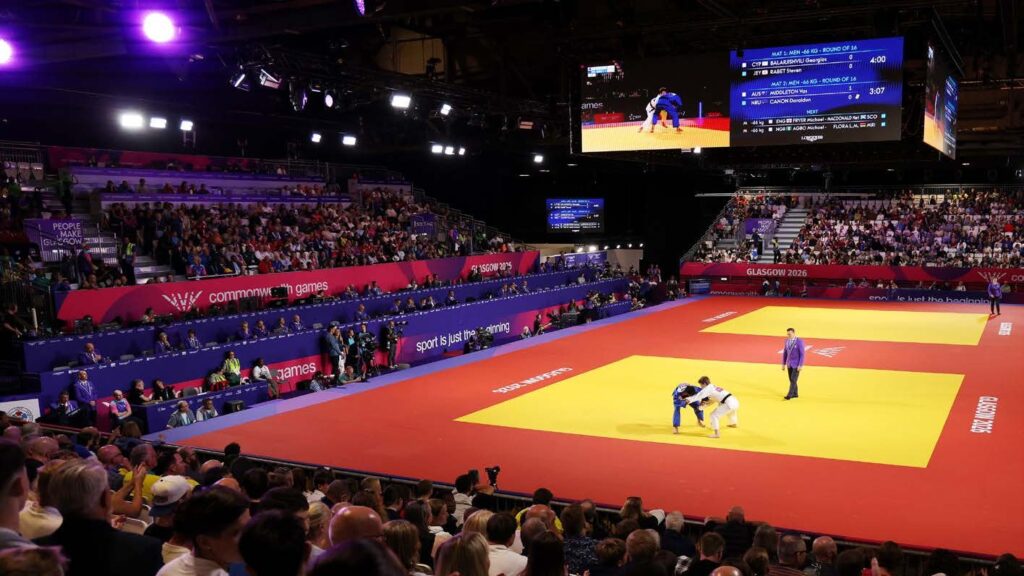
Every competition venue was an existing building within an eight-mile corridor of the city: Scotstoun Stadium, Tollcross International Swimming Centre, Glasgow International Arena with the Sir Chris Hoy Velodrome, and the Scottish Event Campus. A further £5.7 million was spent across three sites before the Games to speed up refurbishment.
The SEC carried the biggest share. It hosted six sports plus the ceremonies, and its sessions account for 260,780 of the 448,473 tickets issued, about 58% (our sum of the report’s per-venue table). Netball alone issued 122,972 tickets over nine competition days, the most of any sport. Unlike 2014, when the Organising Company took over the venues and ran them with its own staff, Glasgow 2026 used the existing venue teams at the SEC and Glasgow Life, and funded dedicated project teams at both so their staff could keep running their normal business during planning. The Organising Company also covered the venues’ lost revenue and the cost of relocating tenants and regular users while the Games were on.
Hotels replaced an athletes’ village, with athlete and team accommodation costing £12.5 million. The report says this meant using established city infrastructure rather than building a village that then needs converting.
How the money was spent with suppliers
The Organising Company stayed small (562 staff) and delivered through embedded suppliers, with another 2,288 people from those suppliers and 99 from venue partners. Event delivery and venue management went to Trivandi, with other contracts for ceremonies, sport presentation, broadcast, accommodation, transport, connectivity and signage. Of the 104 core suppliers, 39% of contract value sat with firms in the Glasgow City Region, 45% elsewhere in the UK, 15% overseas and 1% elsewhere in Scotland. Twenty-two suppliers from outside the city set up a base in Glasgow for the Games, which the report says meant around 90% of contracted spending was delivered from within the region.
Funding was mostly not public. Commonwealth Sport put in £118.4 million of the £162.2 million raised, commercial revenue brought £39.8 million (ticketing was the largest part, at £15.1 million net of fees) and public money was about 1%. The report compares this with Glasgow 2014, which it says was around 78% publicly funded.
What it means for organisers and venues
For UK organisers the useful point is that a large multi-day event can produce most of its local spending through visitors staying several nights, and that a city with enough arena, exhibition and hotel capacity can host it without new building. Glasgow’s case rests on the SEC and the hotel stock, which is also the argument behind the £6 million Destination SEC funding announced last week. If you are weighing Glasgow for a large conference or exhibition, our Glasgow conference venues page lists the city’s venues, and our guide to Glasgow air links for conference planning covers getting international delegates there.
The report also lists what did not go well. Accessible parking at Scotstoun Stadium, Glasgow International Arena and Tollcross was oversubscribed, step-free public transport was not available on every route to the venues, and the hotel model made it harder for athletes to meet each other: 42% of 180 athletes surveyed said it limited those opportunities. The economic figures cover the short term only: the report says longer-term effects, including Glasgow’s continued capacity to host major events, fall outside its scope and have not been quantified.
The delivery model also leaned on agencies and production suppliers rather than an in-house team, which is how most large UK events are already run. Our directory of event production and brand experience agencies covers firms doing that kind of work.
Sources: Commonwealth Sport, Glasgow 2026 Games Impact Evaluation (report dated October 2026); Access All Areas.